Showing posts with label finance. Show all posts

Thursday, 30 December 2021

The Strange Financialisation of The Guardian

It is surprising the extent to which The Guardian newspaper / media venue is subject to criticism from it's own readership and also the wider political and social community.  It is one of the few truly influential and substantive media outlets which is not owned and controlled either by a national government or by an individual or family group (albeit a family is very much involved in it via the eponymous Scott Trust).  Before I start criticizing it, I should explain the ownership and control structure of The Guardian group in order to contextualize how decisions are made there.

The Guardian is owned by Guardian Media Group, which has only one shareholder - the Scott Trust.

The Scott Trust, named after The Guardian's longest serving editor, CP Scott, exists to "secure the financial and editorial independence of the Guardian in perpetuity".

 CP Scott defined the Guardian's founding principles as:

"honesty; cleanness; courage; fairness; and a sense of duty to the reader and the community"

These are effectively (somehow) embedded in the operating principles of the Guardian Media Group.  The problematic aspect is that the Guardian Media Group (GMG) is a for profit UK company which "delivers the financial security that allows The Scott Trust to achieve its central objective", it's technically a holding company with operating companies underneath it.  The above-mentioned principles are subject to the whim of whomever controls the Guardian Media Group entity.  

Though the Scott Trust is the ultimate controller (via it's 100% ownership stake) in reality the executives of GMG are the people who take the decisions with respect to the immediate direction of the company.  The GMG executives are the managers of the Guardian Media Group.

The Scott Trust's Directors are:

Chairman Ole Jacob Sunde 

(2015, Chairman since 2021)

Somewhat bizarrely, in order to maintain it's independence, The Scott Trust has appointed a career Mckinsey consultant and serial board member who sits on a number of other boards in Scandinavia of non-independent media groups which are actually controlled by wealthy families. Works at Columbia University.
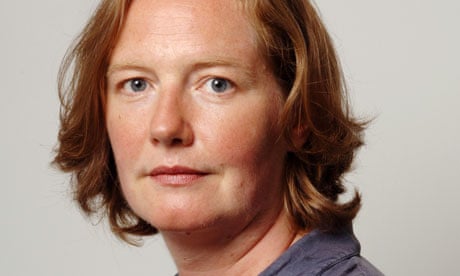
 

Emily Bell 

(Trustee since 2013) 

A former Guardian stalwart who launched the Guardian's original online presence (Guardian Unlimited) and later departed to take a professorship at Columbia University.  Given the plethora of digital interests within the group, her experience must be vital.  However, as a result of the governance review she will move to the GMG board.

 

Catherine Howarth

(Non-Exec since 2015)
A serial board member and corporate governance activist.  Has negotiated her way into many a board room through the use of the Share Action platform.  Unclear what is brought from a media perspective given her primary specialism is in lobbying companies and financial service firms to change their corporate practices and one feels that the Guardian is not the immediate priority for this kind of thing.
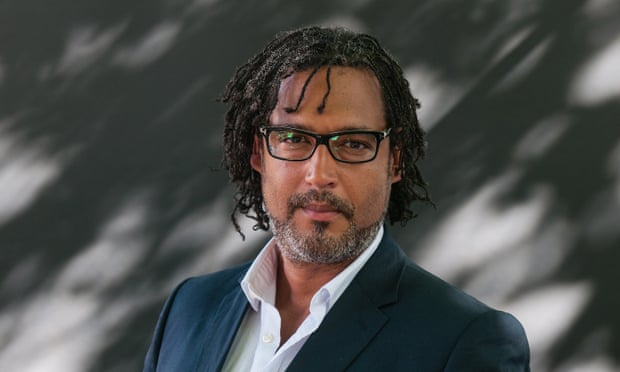
 

David Olusoga

(Non-Exec since 2018)

A writer, director and academic with impeccable credentials and a long track record on the creative side but precious little commercial experience.
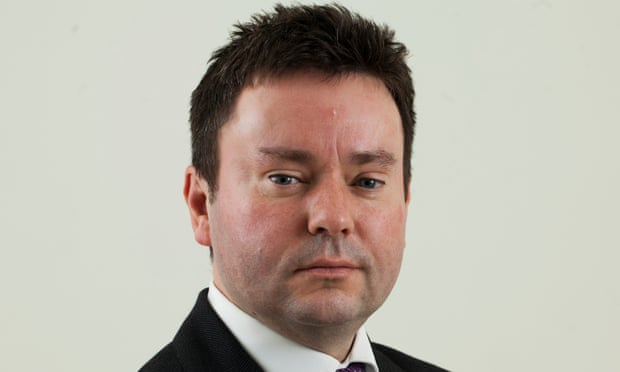


Nils Pratley

(Journalist Director since 2016)

The Guardian's business and city correspondent and the person elected by the Guardian's journalistic staff to represent the interests of the Group's editorial staff on the Scott Trust.  Katherine Viner (effective GMG CEO) is his boss.



Stuart Proffitt

(Non-Exec since 2015)

 
Strange choice but one of the longest serving members of the trust board.  Has a long track record at Penguin and Harper Collins on the executive side but these are private sector commercial publishing organizations rather than freedom promoting journalistic institutions.  One of few board members who pre-dates Katherine Viner.


Matthew Ryder

(Trustee since 2020)

A campaigning barrister who has also worked for the Mayor of London under Sadiq Khan's administration, he brings a long career of specialist legal understanding on Human Rights issues and media law topics.  From his background and pedigree, one of the most qualified people to be sitting on the Scott Trust board given it's raison d'etre.


Vivian Schiller

(Trustee since 2015)

Vivian Schiller joined the Scott Trust in 2015. She is Executive Director of Aspen Digital, a program of the Aspen Institute. Previously she has held multiple high-profile media roles including head of news at Twitter, general manager of NYTimes.com and president and CEO of National Public Radio. Strong background given the priorities of the trust, especially her experience with NPR which has to survive the markedly more cut-throat and evil media landscape .


Mary Ann Sieghart

(Trustee since 2020)

A stalwart of the right-of-centre press with impeccable credentials when it comes to middle-of-the-road commentary.  She also sits on a number of investment trust boards which is one of the easiest gigs in the professional director career.  Recently "promoted"to the GMG board where the money is better.


Russell Scott

(SID since 2015)

Has the longest career description on the Scott Trust website which is ironic given his main qualification is in the name. Obviously trusts are a complex way of pretending assets are not part of a family but it must be said that the Scott family have generally only taken a minimal direct salary from the Scott Trust and have thus avoided riding on the coat tails of the group by focusing on such media-unrelated areas as "(a) consultancy business specialising in strategy and execution for digital audience growth and monetisation" and "...senior roles in consumer publishing, digital and broadcast sectors".


Katharine Viner

(Trustee since 2015 when she also became Editor-in-Chief of the Guardian News & Media) 

Katharine Viner is the Editor of the Guardian and effectively the most powerful person in the GMG and Scott Trust.  She makes editorial decisions and recently ousted the CEO of the GMG when they clashed over the commercial direction of the enterprise.  She led the fledgling Australian organization before transferring over to the perenially loss-making US side of affairs.  Ms Viner is the person who carries most responsibility for the future progress or otherwise of the GMG and Guardian News Media.

Guardian Media Group

For reasons which may become clearer, Guardian Media Group has a substantive board of non-executive directors and also a group of executive directors who are not directly involved in the underlying operating companies. Though this seems illogical, given the enterprise is effectively a subsidiary of another (trust) company and that it creates a duplication of oversight between an asset owner and it's underlying operating entities, the rationale for this becomes clearer when one examines who makes the day-to-day decisions.  GMG is becoming the effective senior management and also the effective governing organization of the Guardian and is, in effect, supplanting both the Scott Trust and the management of the underlying entities.  The Scott Trust is put nicely in a corner where it can get on with it's business of, well, being the Scott Trust.  At the same time, the operational management of the underlying organizations within the GMG (ie Guardian News & Media) become "focused" on their roles of being journalists and stay out of the "commercial and financial strategy and delivery" which will become the preserve of the GMG.

GMG tried to obfuscate this earlier in the year when a long-touted "governance review" determined that all was well but that "to support a business structure and model which has now been largely supplanted by a new model focused squarely on journalism" a "...clarif(ication of) our governance arrangements will give better support to the business and to our senior executive team in developing and implementing successful long-term strategies across editorial, commercial, product, data and other teams.". This is the kind of garbled management speak of which Mckinsey would be proud and is much loved in corporate world but perhaps something which the Guardian might wish to shy away from given it's focus on editorial and journalistic independence and integrity.  In effect what happened was that two of the Scott Trustees mentioned above (Ms Bell and Ms Sieghart) moved from the Trust to the GMG, where opportunities to influence and be paid commercial salaries will be enhanced and which, we assume, will lead to a dilution of power at the Scott Trust level.

GMG Ventures

At the same time, GMG has chosen to incoporate a hellish-sounding VC fund (GMG Ventures) which will be structured for tax efficiency purposes within the group, handily providing a sink (and means of tax structuring) for losses on speculative ventures as these can be hived off into a subsidiary (and offset against tax liabilities on investment gains from the broader GMG) as opposed to handled within GNM itself and inevitably, should any of these be successful, used as a spin-off vehicle to enrich the relevant GMG executives and generate investment returns for GMG (with a nice kicker for GMG Ventures LLP and it's five employees).  Effectively seeking to replicate the staggeringly successful Auto Trader transaction which was master-minded by former GMG CIO and head of GMG Ventures Alan Hudson.  As per the GMG website "GMG’s investments provide financial security and support for our journalism... GMG has built a cash and investment fund of over £800 million, which includes the proceeds from the 2014 disposal of its 50.1% holding in Trader Media Group (Auto Trader)." 

I guess the question you might ask yourself at this point would be why, when GMG's position is secure following the Auto Trader transaction has it decided to set-up it's own Venture Capital Fund? A VC fund is like a long term hedge fund where returns accrue more slowly (provided one avoids shitting the bed in a world of highly speculative investments) and where you can invest more readily in your friends businesses with less scrutiny.  It's not like the GMG is in need of the money and it's unlikely that managing a moderately sized VC fund wont distract the attention of the otherwise busy GMG executives.  Indeed it seems that the management of GMG should be more focused on "commercial and financial strategy and delivery" as opposed to structuring VC funds, but, thank goodness, Alan Hudson and his team of four are there to manage the fund and ensure that everything is OK.  

Obviously given GNM's unhappiness with tax havens, we hope that GMG Ventures wont engage in the kind of aggressive offshore tax planning which GNM has done so much to expose.  That kind of thing might call into question the editorial independence of Guardian News & Media.

Thursday, 16 December 2021

Offshore

One of the more insidious but ingenious moves of modern finance has been to transfer the domicile of capital pools of ownership into jurisdictions outside the direct control of meaningful governments (the governments of the Cayman Islands, British Virgin Islands or Guam) and to have neutered the only government with extra-territorial reach by jamming its legislative process to such an extent it will never have the political will to go after the capital pools which are concurrently destroying the fabric of the nation which spawned most of them.  

I don't include the countries which are sensible enough to avoid this insane structure in the list of countries subject to this effect; most African and Asian countries do not permit their nationals to transfer their nations wealth outside of their jurisdictions through capital controls and Russia and China exist in permanent conflict with their elites, preventing them from fleeing offshore and when they do, punishing them; but certainly in the Anglo-sphere, this problem is rife.


Instead of addressing the gradual leakage of capital from the grasp of the government, the federal government of the world's biggest democracy is instead set out on adventures to conquer new frontiers in order to feed the insatiable beasts which battle within and outside it for new markets.


What a bizarre outcome that the worlds most powerful country would knowingly allow itself to be destroyed thus by the promise of a few extra percentage points of returns for the investment portfolios of the rich and powerful.

Saturday, 1 May 2021

How much leverage can you fit into a system?

Private Credit Ahoy!


The Financial Times reports that the US "Investment Group" with $200bn of AUM in Private Credit funds will launch it's largest ever private credit fund with Ace 5, an €11bn fund which has completed it's fund raising and will start lending to borrowers, replacing the aparently much diminished banking credit provided historically but also seemingly displacing bond markets due to the desire of massive borrowers to only have one single creditor to negotiate with.  The fund will have 180 investors (65 new) with 80% of the capital coming from existing investors.  Including leverage the fund will have around €15bn of credit to deploy.

Ares is an interesting firm you may never have heard of, its grown a sustainable 39% in the last year, impressive during a Covid inspired recession and lockdown when banks have been reducing their overall credit profile. The group boasted of "...record quarterly deployment" in their press release  reported in their conference calls as 60% higher YoY (ie, they're lending out more than ever) with COO Michael Mcferran reporting “With over $56 billion of available capital in flexible investment strategies, we are well positioned for continued growth as we continue to leverage the advantages of our expanding investment platform and global presence.” 

These are staggering numbers from a firm you are unlikely to know much about given it operates in the shadows of a credit system which has already been subject to enormous expansion since governments across the world stepped into prop-up companies in their countries during the pandemic. 

Private credit providers are not only stepping in, but taking over, able to raise larger quantities of credit for borrowers without those pesky internal limits and capital requirements that banks are subject to.  Private credit providers can lend more, with complex terms and fewer limits.  They can also leverage themselves via various mechnisms (CP issues, paper programs, repos, just to name a few) whereby the exposures effectively rebound back to the underlying banks and financial companies which are unwilling to provide the financing in the first place.  What is fascinating about Ares is that they're playing across the capital structure, they have arms investing in distressed debt, private credit, private equity, listed equity, etc, etc.  Each of which seems to have the ability to invest into the other. 

Ares quote a $207bn AUM but a fee-paying AUM of $136bn, with $37bn of uncalled capital and $34bn of assets on which they don't appear to be earning any fees.  These assets are likely assets invested in through other parts of the firm (ie, "captive" assets) which would not incur fees because they are effectively be charging themselves.  The difference with these kinds of fees is that they don't really matter, it's the upside on the investments themselves which goes to the P&L and Ares wrote down $49mn in the first quarter relating to some historic fund holdings.  That's a lot for a company which made $52mn PBT in the first quarter.  However, as they say 30 minutes into their recent earnings conference call, 50% of their transaction flow is coming from their existing portfolio.  I would need to check, but that sounds like they're primarily refinacing their own investments and loans.  Maybe this is wrong.

Ares recently purchased Landmark, another manager you never heard of, but also received a $250mn investment from Sumitomo Mitsui, a Japanese banking group you probably have heard of.  Landmark is a Private Equity firm which specializes in secondaries trading, effectively buying existing Private Equity assets from other private equity funds (or out of Special Situations credit into Private Equity funds).  Sumitomo is an enormous Japanese banking group with a $2.25tn balance sheet and a lot of money to lend, current loan book stands at $811bn.

I've never waded through a company in such a brief period of time and come across something which so perfectly epitomises what is going on in the market.  This firm is the next generation of private credit manager.  It is investing throughout the credit structure, it has staggering quantities of capital at it's disposal.  It can provide equity capital via it's PE business, it has a global reach and it's growing at a spectacular rate.  

 The downside for the investors and counterparties to these companies is that they have relatively minimal amounts of capital in their ownership structure, no access to central bank money and they will be limited by their own mandates and fund structures in what they're permitted to do with their deployable capital in the future.  Provided the good times roll, these companies will likely be fine.  

When the music stops, then we'll see what happens.

Sunday, 27 December 2020

Marx, Capital and the Madness of Economic Reason by David Harvey


 This is a wonderful book to read, especially if you've recently read or are in the process of reading any of the Capital series. David Harvey is an excellent writer, though he does switch into incomprehensible scholarly mode on occasion (the appendix contains a couple of good examples of this).  

The expressive and clear way in which he elucidates on a number of key theories from Marx, and also his bringing them into a contemporary context (eg, China, Financial Crisis) makes him an excellent companion to Marx and also a fine standalone author.  Furthermore, his anthropology background makes his writing much easier to access than standard economics writing which often becomes almost unreadable from a technical perspective on occasion for anyone apart from the dedicated economics scholar.  

I came across his writing after reading a recent issue of Tribune magazine and I will likely be reading more of his books.

Tuesday, 12 May 2020

For what it is worth

There are many ways that we value things as humans and there are a multitude of values which are ascribed to every object by different humans.  Such it is that a painting which is kept in a cupboard unknown for 50 years can suddenly be ascribed a value in millions.  Or, conversely, a car which was worth many thousands of pounds can be destroyed in an accident and thus be attributed the value simply of its underlying materials, which will be much less than it's prior value.


So it is with Covid19.  Things which were once not valuable; face masks for instance, become worth much.  Things that were once valuable, cinemas for example; become worthless.  

There is an injustice to this.  Why should those with face masks be rewarded for their fortune yet those with cinemas be punished?  All on the turn of a biological development which none of us could have predicted and which none of us understand.  The feeling, of anger and pain, is strong for those who have vested interests in the discussion, more on the face mask side than the cinema side, clearly.  

What becomes less clear though, is why these questions of value, which can turn upon the stroke of good fortune, should have such a fundamental impact on human lives; could even have such a fundamental impact on our future as a species. Why is something today valued so differently from something yesterday?

Because let me be clear now, this COVID19 is the planets response to us.  It is not going to go away, it is not going to relent because we want it to, it is not something we can simply wish away.  We are merely in the foothills of a long trek which will devastate our species and which we as humanity will lose whatever happens, but in the same vein will likely win in the end because that is the nature of our species.  We exist and we continue.  

Thus is so much of the writing and analysis of this issue so meaningless.  One group seek solace in historic precedent, with references to 1918 but, for gods sake, not 1348.  Others seek solace in the standard diseases which we understand and are used to, equating this pandemic to traditional winter flu outbreaks.  Others prefer to seek solace in the blame of others, equating Chinese incompetence and pride with a grand plan to take over the world. Still more of us seek solace in the lionisation of health workers or the heroic people who maintain our delay lives while a killer lurks among us.  Still others look to a brighter future when the world emerges blinking from a long slumber having been purged of its sin and with a view to a more suitable tomorrow, adjusted for whichever prism the person views the world through.

But, dear reader, while all of these opinions are helpful and useful exercises to purge us of the feelings which the pandemic has brought to us, none of them provides meaning to the experience.  The reason that they do not is that this experience does not have a deeper meaning.  It is a virus.  It is a virus which kills a lot of people who come into contact with it.  You cannot see this virus until it is captured in the eyes of a dying patient on a bed in an over-burdened ward in a hospital in whichever place it has chosen to spread.

We always seek to find, whereas with a pandemic we seek to lose.  We seek to lose ourselves because the pain of being so powerless in the face of something so inhuman is so terrifying.  Few of us have dealt with natural disasters of the scale which equate to the pandemic.  South Africa has.  Japan has.  Sierra Leone has.  The Democratic Republic of Congo has.  But most parts of the world have not.  We have not because we did not need to and we should count ourselves blessed that we did not.  But then, when one is blessed, eventually one becomes cursed as the great wheel turns.  

Now the wheel has turned.  There is much we can do, but much we cannot, and so many of our natures are designed to fight the beast with the tools and weapons we understand best.  But these do not help against the inhuman nature of this enemy. Many of us will simply have to wait, hope and, well, hope.  Trust in a small group of people who have prioritised the welfare of the species as a whole above their other concerns.  There is no other option.  They hold our fate collectively in their hands only so far as they can control, advise and assist in the measures necessary to manage the pandemic.  No. One. Else. Can.

So, the message of this writing is not clear but I hope it makes some sense.  Be prepared for this to last.  It might go away quickly.  It probably will not.  It might lead to a better tomorrow but tomorrow might be 10 years away and by that point many of us will be dead.  Let us hope that we can last the night and move to the light at the end of the tunnel.  But let us also be prepared for that to take some time and not to be ashamed of our fear, helping each other in any way we can.  There will be many problems along this road we are now walking, but we will get there some how or some way.

Understanding Brecht - Walter Benjamin

Brecht, Brecht, Brecht. The name appears everywhere, in my reading, in my life, in day-to-day thumbing through periodicals. People refer t...