
Sunday, 10 July 2022
Deng Xiaoping: A Revolutionary Life

This town is becoming like a ghost town, no not one of those good ones, a really shit one.
We are now seeing a few articles on the decline of Brick Lane and the gentrification of the westerly quarter of Tower Hamlets borough. Tower Hamlets is one of London's poorest boroughs as measured by a number of social factors, standing in stark contrast to the outer-London boroughs to the North and West of the city and the gilded wealth of the City of London to the West. It has a population of around 300,000 people which account for many of the inhabitants of the inner London area. It contains more than half of the tallest buildings in the borough, primarily in the Canary Wharf development area but increasingly now towards the easterly part of the borough.
Tower Hamlets incorporates much of the old East End of London, previously heavily industrialised; proximity to the docks along the Thames river required an abundance of labor to drive the machinery and transport of the materials that flowed into the UK via London. With the departure of so much industry and the switch to more efficient and scalable container based transport hubs nearer the coast, the entire dockside infrastructure effectively fell into disuse or was not repaired after the war and one of London's challenges since the 1960's has been what to do with a huge area which incorporates almost 35% of the available land in one of the worlds most expensive cities. An area incorporating Southwark and Newham primarily.
As with most discussions over land use within London, the key concern has been how to achieve an effective balance between private investment and public use. The population of Tower Hamlets is astonishingly volatile, reaching a high of 600,000 people in 1900 to a low of 150,000 in 1980. Much of this decline can be attributed to the decline of heavy industry in central London but the long-term impact of the devastation wrought by bombs in the second world war, where 48,000 houses were damaged, cannot be understated. Tower Hamlets' population has now climbed back to 300,000 as of 2016 and will surely climb again at the next census given the trend of developments. Or will it...
As with most discussions in any country over the use of the most basic resource, land, the discussion is an inherently political one, with many different interests jostling for control of the land and with many different layers of government playing a role in the decision-making process. The most emblematic of the schemes relevant to a discussion of Tower Hamlets is the London Docklands Development Corporation, which was established by the Conservative government of Margaret Thatcher in 1981 and which was established as a consequence of the decline of the local infrastructure and the ineffectiveness of the local governments to deal with this perceived decline. Huge job losses, partly a result of the industrial policies of the Conservative government but also a consequence of technological changes, led to very high levels of unemployment and population decline. One cannot help but think that had this been an area out of sight in the North of England, the government would have been less inclined to do anything about it, but the centralised nature of British government and the proximity to that centre of power meant that addressing the under-development of the East End became a cause celebre for the Conservative government.
It would seem the primary development was the Docklands Light Railway or DLR, which was built during the course of the 1980's and which I remember using in the late 1980's as a kid. the DLR also accounted for around 50% of the cost of the total public funding provided to the LDDC. Which leads us to another fundamental driver of population in cities, Transport. Without being able to access a city, the city is effectively unusable. This was always an aspect of the South East of London as it has been overlooked by the transport planners within the city until relatively recently as so many of them lived in the Western and Northern parts of the city and thus had relative reliable connections to the London Underground network. The extension of the DLR and the extension of the Jubilee line at the turn of the millennium has significantly increased the accessibility of parts of the city, which in turn has supported an enormous growth in housing developments, population and also, consequently, the costs of accommodation.
Wednesday, 4 May 2022
Boris Johnson, what is the end game here? Economics
Boris Johnson remains the leader in waiting of the Conservative Party in the United Kingdom and thus, by default, the Prime Minister of the United Kingdom. As he continues to face flak from the opposition Labour Party in parliament, he has continued to rebuild his credibility within the Conservative Party and he has realised that in the current environment, this is the only game that matters. Newspapers, commentators and opposition MPs can say what they want, but the UK political structure means there is only one constituency he needs to appeal to over the next month, and they're 359 of them currently sitting in the House of Commons.
The Conservatives have an enormous majority in the House of Commons and if they can right their political ship, they can pass pretty much any legislation that they want. In reality they are a supine group of crypto-fascistic doctrinaire monetarists (Baker, Sunak, Javid, Bridgen) who pretend that they are a diverse group of free-thinkers. In reality there is little intellectual capability in the party. Therefore they will revert to what they have been doing for the last 12 years.
Economy:
Tax cuts for wealthy people, stealthy administrative style taxes to finance the inevitable costs of the state and more quasi-private PFI style financing which increases the "role of private capital" in the economy. In reality, this means more of the same with less authority in government to police the rent-seeking investments which the private sector players will extract from the government. So lets have a look at shares in John Laing (oh sorry you can't it's owned by KKR) Serco (disastrous share price performance under Conservatives so far so plenty of potential upside), Capita, Skanska and the roll-call of others who benefit from the gradual undermining of the state.
Hilariously, in the way in which only our financial capitalist system knows, the system is gradually eating itself as the rents from these Public-Private Partnerships are extracted by private companies, often domiciled in offshore low tax jurisdictions. These vehicles are not subject to any form of public scrutiny, as this is a much nicer and safer way to extract rents from the government than doing it via a publicly listed vehicle like Capita which has annoying independent directors and public disclosure requirements. Set your company up in the British Virgin Islands, call it "Essential Equitable Funding Diversified Limited" and run your (UK subsidiary) through it and then own that company via another shell company and you have helpfully obfuscated not only your own ownership of the company but also voided any true transparency on your costs which means that once you have bypassed the governments pathetically resourced departments with responsibility for overseeing the value-for-money on the contracts, you can charge what you like. I doubt Private Eye will be able to do an FOI request on Essential Equitable Funding Diversified Limited, it doesn't apply FOI style transparency requests. It's in the British Virgin Islands (theoretically).
After that the money extracted from the transaction ships out to Monaco or wherever the underlying beneficiary is pretending to live whereupon they structure it into their "Private Wealth Vehicle" and then it comes back into the global pool of financialised capital. This currently, used to spend most of it's time investing in United States-based technology companies who seek to undermine all personal privacy (Google, sorry Alphabet and Facebook) or become rent-seeking virtual landlord monopolists (Microsoft and Apple) or set-out on their missions to undermine the rest of the economy (Amazon) or simply to advance the interests of a megalomaniac and invest in crypto-currencies (Tesla). Nothing is stopping this insane cycle, but at some point you might want to at least unhitch your horse from this as it's not going anywhere good soon and the benefits it derives to any modern economy are minimal. However, it does enrich an ever-shrinking portion of the worlds population and many of those people are either Conservatives themselves (Rishi Sunak) or substantial donors to the Conservative project.
In the interim they're going to have to deal with a population which is adjusting to an ever increasing cost of living crisis with a toolset composed of a strange nationalistic screaming culture war and an economics policy consisting of tax breaks on tax rises, cut-price rail tickets and flags.
Tuesday, 8 February 2022
Taboo by Franz Steiner

This book provides a window into a world which has long passed. It's a small window on a very strange world of anthropologists and sociologists in the second half of the 19th and early part of the 20th century but it's fascinating to catch a glimpse of it. The book is part of a Pelican series (an imprint of Penguin) which must have been offered in the 1960's as an anthology style introduction to Anthropology but I found it fascinating given the depth it gets into on a very specific topic (Taboo) and the way in which that topic is so fundamental to so many different advances in thought (psychology, sociology, theology) during a pivotal moment for western thought. Who would have known that the topic of taboo, brilliantly revealed as something we thought came from Polynesian islanders but which Steiner reveals as fundamental to society and the monotheistic religions.
https://en.wikipedia.org/wiki/Taboo_(book)
Tuesday, 11 January 2022
The decline and stagnation of Last FM and rise of the "Streaming Giants"
Last FM is a music service which tracks the music you listens to and allows you to comment on and post about the music you are interested in and love or hate, or simply that you enjoy. It also sends you recommendations about other artists or tracks you might like. It is a slightly weird service beloved of people who have an obsession with tracking things about themselves, in a similar vein to fitness trackers, train spotters, restaurant reviewers, blogs, book trackers and the vast panoply of other things which people like to keep a record of.
I have used Last FM for a long time (around 8 years) and it's been something I've loved as I've always had a fondness for tracking my music listening, carrying it around like a badge of honour. One of the main reasons I despise Apple so much is that they made porting your music library between devices so fucking difficult in the early noughties, which meant that my listening records (which would probably now be a mark of shame) from my late teens into my early thirties were lost forever, stuck on a progression of fucked Ipods and laptops with built-in obsolescence. Last FM has soldiered on over the years despite the fact it doesn't seem to advertise anywhere. It used to be the top search result on Google back in the days before Google became an advertising free-for-all.
The Last FM service still seems to meander along (owned by the benevolent society of ViacomCBS) and I check it all the time to see what I've been listening to and what the other people I know who actually use it are also listening to. It's like the service which figured out the social side of music in a similar way Soundcloud has but in the way in which Spotify, Tidal and Apple Music definitively have not. I don't really understand why the music streaming giants are so averse to setting up a functioning social media side to their music platforms other than Soundcloud. It doesn't really add up but maybe it's a function of Spotify particularly's desire to retain a "pure" music platform (while still harvesting all the data from their customers). The closest that Spotify gets to social media is the list of music which the people who I somehow got paired with all those years ago when I had a Facebook account have most recently listened to. This isn't really a fair reflection of someone's music tastes as you're only seeing a snapshot of the last thing they listened to and that's only when you're using the shonky Spotify desktop application, which is an awful thing to use.
Why do the big music streaming services not offer this social aspect? With the exception of Soundcloud, which is a very different service none of them really do. Apple and Spotify allow you to "like" tracks and to maintain playlists of music on their service which are not shareable outside their service and Apple have allowed you to (kind of) blend your personal collection of MP3s / digital music with their own service which puts them streets ahead of Spotify and their shitty attempt at doing this through their aforementioned piss poor desktop app. However this is very individualized, it's about your experience with the platform as an individual unless you count the shared playlists, and therefore there is very little potential for you to be able to really interact with other people you know on their platform.
Based on the Shohsana Zuboff analysis of social media It seems to be a given that technology companies are desperate for you to engage with them so as to allow them to surreptitiously harvest more data about your day-to-day activities. Engagement and clicks are the keys to unicorn status. However, the music streamers and in fact the video streamers as well, do not seem to follow this business model. I don't know anyone who would admit to spending more than the bare minimum of time on any of the music streaming services unattractive front-end interfaces. They are awful.
But what if they're not interested in your interaction a la classic social media like FB, Twitter or Instagram because what they want to do is sit in the background listening, harvesting and tracking you while you do whatever it is you do to a soundtrack? What if their sole purpose is to find out what you're listening to and when and where and to use that data to build a listening profile and understanding of music taste which would allow them to front-run any trend with their own brand of weird anonymous music? We've all experienced the "Discovery" Spotify playlist which continually suggests unknown artists with hundreds of thousands of plays on Spotify but little to no footprint outside the platform. Martin Landh was the one who kept popping up for me, he's written the music for lots of adverts. You can still contact him via Hotmail despite his 157,000 monthly listeners on Spotify. I guess he's not making too much from that gig.
For the music streamers and likely the video-streamers too, transparent user interaction between each other where people can comment and criticise music is unwelcome as it introduces a wild-card of non-controllable preferences into the algorithims they are building which will inevitably (and this is something which Zuboff touches on) move from tracking preferences, to creating them.
We've recreated record labels, except now they're technology companies pretending to be music streaming services run by data analysts who don't have any link to the music beyond recommendations and analysis generated by a massive database and algorithmic insight into the listening habits of the worlds Spotify and Apple Music users.
Maybe Last FM had something there but if it's owned by ViacomCBS I doubt they'll ever have the insight or vision to make something of it. Oh and if you want to see what I'm listening, a topic of very little interest to anyone other than me, you can find we me here.
Thursday, 30 December 2021
The Strange Financialisation of The Guardian
It is surprising the extent to which The Guardian newspaper / media venue is subject to criticism from it's own readership and also the wider political and social community. It is one of the few truly influential and substantive media outlets which is not owned and controlled either by a national government or by an individual or family group (albeit a family is very much involved in it via the eponymous Scott Trust). Before I start criticizing it, I should explain the ownership and control structure of The Guardian group in order to contextualize how decisions are made there.
The Guardian is owned by Guardian Media Group, which has only one shareholder - the Scott Trust.
The Scott Trust, named after The Guardian's longest serving editor, CP Scott, exists to "secure the financial and editorial independence of the Guardian in perpetuity".
CP Scott defined the Guardian's founding principles as:
"honesty; cleanness; courage; fairness; and a sense of duty to the reader and the community"
These are effectively (somehow) embedded in the operating principles of the Guardian Media Group. The problematic aspect is that the Guardian Media Group (GMG) is a for profit UK company which "delivers the financial security that allows The Scott Trust to achieve its central objective", it's technically a holding company with operating companies underneath it. The above-mentioned principles are subject to the whim of whomever controls the Guardian Media Group entity.
Though the Scott Trust is the ultimate controller (via it's 100% ownership stake) in reality the executives of GMG are the people who take the decisions with respect to the immediate direction of the company. The GMG executives are the managers of the Guardian Media Group.
The Scott Trust's Directors are:

(2015, Chairman since 2021)
Somewhat bizarrely, in order to maintain it's independence, The Scott Trust has appointed a career Mckinsey consultant and serial board member who sits on a number of other boards in Scandinavia of non-independent media groups which are actually controlled by wealthy families. Works at Columbia University.
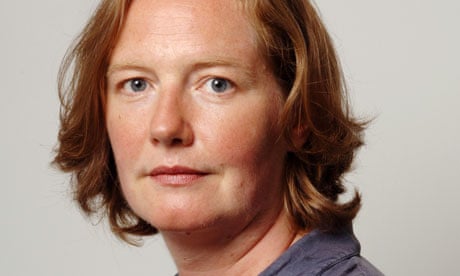
(Trustee since 2013)
A former Guardian stalwart who launched the Guardian's original online presence (Guardian Unlimited) and later departed to take a professorship at Columbia University. Given the plethora of digital interests within the group, her experience must be vital. However, as a result of the governance review she will move to the GMG board.

(Non-Exec since 2015)
A serial board member and corporate governance activist. Has negotiated her way into many a board room through the use of the Share Action platform. Unclear what is brought from a media perspective given her primary specialism is in lobbying companies and financial service firms to change their corporate practices and one feels that the Guardian is not the immediate priority for this kind of thing.
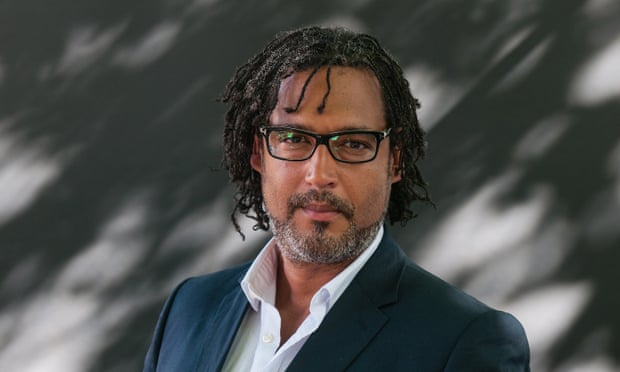
(Non-Exec since 2018)
A writer, director and academic with impeccable credentials and a long track record on the creative side but precious little commercial experience.
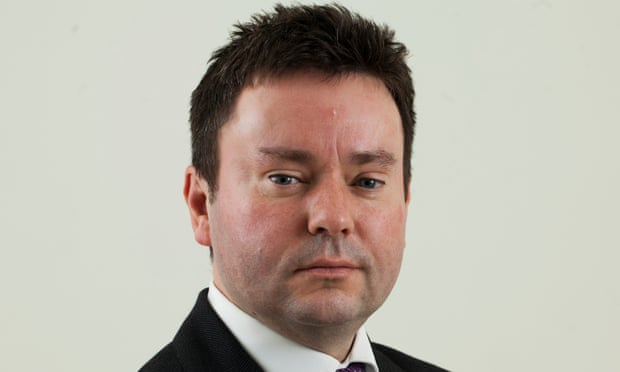
(Journalist Director since 2016)
The Guardian's business and city correspondent and the person elected by the Guardian's journalistic staff to represent the interests of the Group's editorial staff on the Scott Trust. Katherine Viner (effective GMG CEO) is his boss.

(Non-Exec since 2015)
Strange choice but one of the longest serving members of the trust board. Has a long track record at Penguin and Harper Collins on the executive side but these are private sector commercial publishing organizations rather than freedom promoting journalistic institutions. One of few board members who pre-dates Katherine Viner.

(Trustee since 2020)
A campaigning barrister who has also worked for the Mayor of London under Sadiq Khan's administration, he brings a long career of specialist legal understanding on Human Rights issues and media law topics. From his background and pedigree, one of the most qualified people to be sitting on the Scott Trust board given it's raison d'etre.

(Trustee since 2015)
Vivian Schiller joined the Scott Trust in 2015. She is Executive
Director of Aspen Digital, a program of the Aspen Institute. Previously
she has held multiple high-profile media roles including head of news at
Twitter, general manager of NYTimes.com and president and CEO of
National Public Radio. Strong background given the priorities of the trust, especially her experience with NPR which has to survive the markedly more cut-throat and evil media landscape .
(Trustee since 2020)
A stalwart of the right-of-centre press with impeccable credentials when it comes to middle-of-the-road commentary. She also sits on a number of investment trust boards which is one of the easiest gigs in the professional director career. Recently "promoted"to the GMG board where the money is better.

(SID since 2015)
Has the longest career description on the Scott Trust website which is ironic given his main qualification is in the name. Obviously trusts are a complex way of pretending assets are not part of a family but it must be said that the Scott family have generally only taken a minimal direct salary from the Scott Trust and have thus avoided riding on the coat tails of the group by focusing on such media-unrelated areas as "(a) consultancy business specialising in strategy and execution for digital audience growth and monetisation" and "...senior roles in consumer publishing, digital and broadcast sectors".
(Trustee since 2015 when she also became Editor-in-Chief of the Guardian News & Media)
Katharine Viner is the Editor of the Guardian and effectively the most powerful person in the GMG and Scott Trust. She makes editorial decisions and recently ousted the CEO of the GMG when they clashed over the commercial direction of the enterprise. She led the fledgling Australian organization before transferring over to the perenially loss-making US side of affairs. Ms Viner is the person who carries most responsibility for the future progress or otherwise of the GMG and Guardian News Media.
Guardian Media Group
For reasons which may become clearer, Guardian Media Group has a substantive board of non-executive directors and also a group of executive directors who are not directly involved in the underlying operating companies. Though this seems illogical, given the enterprise is effectively a subsidiary of another (trust) company and that it creates a duplication of oversight between an asset owner and it's underlying operating entities, the rationale for this becomes clearer when one examines who makes the day-to-day decisions. GMG is becoming the effective senior management and also the effective governing organization of the Guardian and is, in effect, supplanting both the Scott Trust and the management of the underlying entities. The Scott Trust is put nicely in a corner where it can get on with it's business of, well, being the Scott Trust. At the same time, the operational management of the underlying organizations within the GMG (ie Guardian News & Media) become "focused" on their roles of being journalists and stay out of the "commercial and financial strategy and delivery" which will become the preserve of the GMG.
GMG tried to obfuscate this earlier in the year when a long-touted "governance review" determined that all was well but that "to support a business structure and model which has now been largely supplanted by a new model focused squarely on journalism" a "...clarif(ication of) our governance arrangements will give better support to the business and to our senior executive team in developing and implementing successful long-term strategies across editorial, commercial, product, data and other teams.". This is the kind of garbled management speak of which Mckinsey would be proud and is much loved in corporate world but perhaps something which the Guardian might wish to shy away from given it's focus on editorial and journalistic independence and integrity. In effect what happened was that two of the Scott Trustees mentioned above (Ms Bell and Ms Sieghart) moved from the Trust to the GMG, where opportunities to influence and be paid commercial salaries will be enhanced and which, we assume, will lead to a dilution of power at the Scott Trust level.
GMG Ventures
At the same time, GMG has chosen to incoporate a hellish-sounding VC fund (GMG Ventures) which will be structured for tax efficiency purposes within the group, handily providing a sink (and means of tax structuring) for losses on speculative ventures as these can be hived off into a subsidiary (and offset against tax liabilities on investment gains from the broader GMG) as opposed to handled within GNM itself and inevitably, should any of these be successful, used as a spin-off vehicle to enrich the relevant GMG executives and generate investment returns for GMG (with a nice kicker for GMG Ventures LLP and it's five employees). Effectively seeking to replicate the staggeringly successful Auto Trader transaction which was master-minded by former GMG CIO and head of GMG Ventures Alan Hudson. As per the GMG website "GMG’s investments provide financial security and support for our
journalism... GMG has built a cash
and investment fund of over £800 million, which includes the proceeds
from the 2014 disposal of its 50.1% holding in Trader Media Group (Auto Trader)."
I guess the question you might ask yourself at this point would be why, when GMG's position is secure following the Auto Trader transaction has it decided to set-up it's own Venture Capital Fund? A VC fund is like a long term hedge fund where returns accrue more slowly (provided one avoids shitting the bed in a world of highly speculative investments) and where you can invest more readily in your friends businesses with less scrutiny. It's not like the GMG is in need of the money and it's unlikely that managing a moderately sized VC fund wont distract the attention of the otherwise busy GMG executives. Indeed it seems that the management of GMG should be more focused on "commercial and financial strategy and delivery" as opposed to structuring VC funds, but, thank goodness, Alan Hudson and his team of four are there to manage the fund and ensure that everything is OK.
Obviously given GNM's unhappiness with tax havens, we hope that GMG Ventures wont engage in the kind of aggressive offshore tax planning which GNM has done so much to expose. That kind of thing might call into question the editorial independence of Guardian News & Media.
Sunday, 19 December 2021
Sleaze and Incompetence will only get you so far...
The commentary around the recent travails of the Conservative party seem to revolve around the point that Boris Johnson is incompetent alone and that it is his personal responsibility for the plight that the country and by extension the Conservative party, finds itself in. He is providing a helpful scapegoat for a group of people who lack any form of self critical faculty and can only blame external factors for the terrible state of things, incapable of examining themselves or their own views.
One of the most popular lines you can find in the Independent, The Guardian, The Financial Times or anywhere else you choose to search in the non-Murdoch / Mail / Barclay media complex, is that the sleaze and Christmas parties which the government has been mishandling over the entire time it has been in office is finally cutting through. The parallels are drawn with the Conservative government of the mid-1990's, where David Mellor (sex), Jonathan Aitken (perjury) and Neil Hamilton (perjury and corruption) and more created a perception of decline and sleaze which led to the Labour victory under Tony Blair in 1997. These apparent one-off sleaze events destroyed the faith of the public in the political class and lead to a mass defection of voters to the Labour party. There is a certain amount truth in this but I think it speaks to a certain logic within centrist commentary, that their way is the one and true way and that it is only personal failure which causes people to seek alternatives.
.jpg/220px-Neil_Hamilton_AM_(28136586146).jpg)
Any political party has to deal with this inherent tribalism and it is why old school social democratic and socialist parties were much more than a set of policies and a party political organization but were more social organizations including clubs, social settings, culture, art and more. The modern technocratic Labour party does not achieve this because it is more targeted and driven by politics technocrats who think in the narrow aims of what can be immediately influenced by press releases, policy positions and other dynamics within the gift of the political executive of the party.
The North Shropshire By-Election is an excellent example of the desire for an alternative to the Conservatives being sought by a frustrated electorate, battered by perceptions of sleaze but continually dealing in their daily lives with incompetence in government which is a function of desperately poor political decision-making and mismanagement. The news media which the majority of this electorate will be consuming will be providing them with a host of reasons for these things, but their lack of frame of reference for how to address them means they grasp for the nearest alternative, which is either the Liberal Democrats or the Reform Party. It's not so much about the sleaze, albeit this provides a handy frame of reference when asked, but more about a gradual slide in the standard of living which is influencing this decline. However this is difficult to explain in a focus group. Easier to say that you are "shocked and disappointed" with Christmas parties or trips to Barnard Castle or illicit lobbying or whatever the next thing is.
The true dynamic here is that The Conservatives managed to pull off the trick in 2019 of pretending that they hadn't been the ones in charge for the preceding 9 years and demonizing their opposition, with the help of an especially pliant media infrastructure. This annulled the possibility of an alternative and positioned themselves as a fresh new alternative to themselves. Brexit was a handy identity tool around which to rally their voters. They will not be able to pull this trick off again in 2023 or 2024 and in reality, they are tired, sick and incompetent. The challenge for Labour is not going to be managing whatever nonsensical storm influences the weekends polling in the political-media technocracy but creating the percepction that they can do meaningfully better in government and admitting internally that they're probably going to have to do that in alliance with other parties.
I don't know whether Keir Starmer can do this and to be honest, in an age of charisma politicians, he certainly fails to get the message across with alarming regularity. He wont face Boris Johnson as Conservative leader at the next election, Johnson is done, but whoever emerges from the current bunch of incompetent crypto-Fascists, it's likely they wont be any better a campaigner than Boris Johnson and Dominic Cummings. The path is clearer as the Conservatives self-immolate but the alternative needs to be there and at the moment, North Shropshire shows that Keir Starmer, now two years in charge, is making very little progress on this front.
One final thing; whither goes the elderly vote goes the power. Having witnessed the Conservatives rallying around the anti-lockdown / anti-vaccine cause will terrify some members of their elderly coalition. If Labour or the Liberal Democrats can nail this down, positioning the Conservatives as the party of health irresponsibility, the Conservatives are truly doomed. This is a dynamic which is now playing out across a number of Western countries. Play to the libertarian nut jobs if you want, but you'll get outflanked by Reform or whatever the equivalent is on the right and your elderly vote will desert you. Good luck with that. Goodbye "Lord" David Frost.
Subscribe to:
Posts (Atom)
Understanding Brecht - Walter Benjamin
Brecht, Brecht, Brecht. The name appears everywhere, in my reading, in my life, in day-to-day thumbing through periodicals. People refer t...

-
 Brecht, Brecht, Brecht. The name appears everywhere, in my reading, in my life, in day-to-day thumbing through periodicals. People refer t...
 -
 Thus Spake Zarathustra, an impenetrable work which I started on too young and which left me with a feeling of confusion. What was this that...
 -
Art Spiegelman's " Maus " comics are probably, alongside " Barefoot Gen ", the most impactful pieces of art I have b...