
Thursday, 16 January 2025
Understanding Brecht - Walter Benjamin
Brecht, Brecht, Brecht. The name appears everywhere, in my reading, in my life, in day-to-day thumbing through periodicals. People refer to him with brevity and sadness and seriousness. He plays a role which is beyond my understanding in European culture and somehow his presence is still felt across European literary circles today, even though he passed around 50 years ago.
This book provides something of an insight into where Brecht came from but through the eyes of another wonderful writer, taken early by the menace of Fascism, Benjamin grapples with the meaning and thought of Brecht, the power of what he was trying to do in early theater and the world he was seeking to change. I think this, more than anything else, influences my thinking here. Brecht was writing poetry and plays, alongside staging them himself, but the purpose was greater than the simple act. This was not about money or fame, it was about changing the world. Catching the last great rush of socialist belief before it was crushed by Stalin and the Molotov-Ribbentrop pact. Looking into writing from Jewish authors of the 1930s, it breaks, it breaks the feelings which these worlds, crashing in on themselves as the world closed in around them, must have experienced and how Brecht, in his vantage point, was able to navigate better than Benjamin who was not.
This is a book of literarcy criticism but set against the backdrop of a collapsing world. The world falling in on itself as it hurtled towards what seemed certain fascist takeover and unending misery, which was then replaced with a war which destroyed most of Europe and left a split between two worldviews which divided the continent and the implications of which still echo through our collective minds.


Tuesday, 14 January 2025
Book Review - I am Dynamite - A Life of Friedrich Nietzsche - Sue Prideaux
Thus Spake Zarathustra, an impenetrable work which I started on too young and which left me with a feeling of confusion. What was this that I had read? What did it mean? Why did it feel like I had watched a film starting half-way through, where everyone else knew who the characters were except me? Thus I was introduced to the genius of Nietzsche as a young man, selecting the book on the basis of its weird cover, a 1970s penguin classic, well thumbed by my parents or taken from a second hand bookstore. I knew that the theories in the book delighted me, but I could not fully understand nor grasp the enormity of what was contained therein. This spaking Zarathustra looked somewhat like my father! What fun, but then what eye opening wonder once I started to read.
With the backdrop of not fully understanding his work, this book acts as a wonderful foil, explaining the man, his life, his family. You follow his journey through a difficult world and his arrival at a place which brought the most wonderful illumination but at the same time, sent him to a place from which he could not recover. The journey is the story in this book and the author, Sue Prideaux, does a wonderful job of taking you through Nietzsche's life with the right amount of historical digging. While retaining a Mantell like narrative with a familiarity and tone which brings the character of Nietzsche to life through the page. This somehow humanizes the otherworldly figure of Nietzsche, who roams through the pages as in his life. The narrator moves from place to place, bringing down the records where they exist such as through the diaries of Cosima Wagner, but filling in the blanks where they do not. I found this approach wonderfully effective in maintaining the record.
Nietzsche is not a polarising character, because there is not much to polarise around. He is neither a figure of the right nor the left, much to his hideous sisters chagrin. His thought is so profound but, as Prideaux quite wonderfully surmises at the end of the book, there is no final guiding thought within it. He simply sets out how the ship can now sail, but does not tell us where.


Thursday, 2 January 2025
Book Review - Coronavirus Criminals and Pandemic Profiteers - John Nichols
I like a good polemic, especially when it talks to my side of the fence, you can warm your hands, metaphorically at least on the roasting of people who all to often escape opprobrium through their deployment of the defence of decency or through the deflection of debate to another venue or topic; the Rude Pundit remains my first and best example of this.
The bastards that warrant John Nichols ire are those same people who took us through the first year of the pandemic so incompetently. I almost forgot myself, and thus it was wonderful to read this nicely crafted and narrated book to remind myself of just how much these people took from us and how badly they treated their own people in pursuit of their own political interests or in their belief in the malign politics which had served them so well.
The book is a nice take down of a number of parties, primarily right lurching wing-nuts of the Rand Paul assortment, in a fairly scientific and robust manner, pointing towards their multiple failings, rejection of science based evidence and appeal to the baser elements of their collective dementia. The challenge I had was that I did not see within the book, and particularly within the rambling 30 plus page conclusion where it lost its way a bit, a true ideological take down of just what the defining features of these failures were. Given the stake of what was lost, the millions who died and the lives ruined, it just does not go far enough in determining what the ideology was which brought us to this point.
In a book which from a polemical perspective does not hold back, Nichols does slather blame on the miscreants and does so with erudite aplomb, I found this final step somewhat unsatisfying. Maybe it was the writing of the book so early in the pandemic (as it turned out) in 2021, when we still had around a year to go, which made it more difficult to draw these conclusions or maybe it was the fact that the Biden - Trump circus was distracting everyone still, whatever the circumstances, this is not the definitive history of COVID and it does not begin to really draw the conclusions we need.
Speaking on the first day of 2025, as the forces of reaction and stupidity have gained strength partly through the dislocations created by the pandemic, I can see that there is much history to be written on the COVD crisis topic. As Trump hurtles forward into whatever onanistic chaos he is going to create in his second term, I can feel we have forgotten so much of what happened in 2020 and we have unlearned so many of the lessons we learned back then. We are careering towards a combination of economic crisis, environmental crisis, social crisis and a tail spin into ever more hideous conflicts lead by a political class so weak and craven or stupid that no one is actually in charge any more.
We gave it all up to the market, but as GFC 2.0 approaches, what are we going to do when the market fucks it all up again?

Sunday, 10 March 2024
The Drowned and the Saved - Primo Levi
I first read Primo Levi for a school project when I was 16, his words,
"If This is a Man" and "The Truce" touched me very deeply. He is an
exceptional writer, his prose is clear, lucid and devastating and the
topics he covers are of such a hideous nature, the crimes so
fundamentally awful, that it requires an author of such qualities to
convey these images and messages.
"The Drowned and the Saved" is a
different book but one no less powerful and impactful than his earlier
works. He speaks with the benefit of 40 years further time to consider
the implications of what happened during the Third Reich and he is no
less clear in articulating the reasons behind what happened, the lessons
he learned from his experiences about the nature of human beings and
most interestingly towards the end, how his literature has been received
by those persons (the German people) who bear the responsibility for
the crimes committed by the Third Reich.
This book should be read
by everyone involved in politics today. It is a warning call from a
voice lost too early in tragic circumstances but who can speak with
authority and clarity about things which we may believe are impossible
in our current time but which many of those same Germans who bear
responsibility would have had the world believe they were not aware
either.
"For us to speak with the young becomes ever more
difficult. We see it as a duty, and at the same time as a risk: the risk
of appearing anachronistic, of not being listened to. We must be
listened to: above and beyond our personal experiences, we have
collectively been the witnesses of a fundamental, unexpected event,
fundamental precisely because unexpected, not foreseen by anyone. It
took place in the teeth of all forecasts; it happened in Europe.
Incredibly, it happened that an entire civilized people, just issued
from the fervid cultural flowering of Weimar, followed a buffoon whose
figure today inspires laughter, and yet Adolf Hitler was obeyed and his
praises were sung right up to the catastrophe. It happened, therefore it
can happen again: this is the core of what we have to say."
"Neither Nietzsche not Hitler nor Rosenberg were mad when they intoxicated themselves and their followers by preaching the myth of the superman, to whom everything is permitted in recognition of his dogmatic and congenital superiority; but worthy of meditation is the fact that all of them, teacher and pupils, became progressively removed from reality as little by little their morality came unglued from the morality common to all times and all civilisations, which is a common part of our human heritage and which in the end must be acknowledged."
Monday, 2 October 2023
Cory Doctrow - The Internet Con - How to Seize the Means of Computation
I really enjoy the way Cory Doctrow writes and puts forth his ideas. Many of them are quite complex and technical in their aims and design but I found this book to be an excellent introduction into both the solution and the problem caused by our modern big technology infrastructure. He's also no dogmatist and although we're on the same page politically, I can see how he would still be accessible to someone further to the right.
Erudite and clear. Sorry I'm writing the review on Amazon and Google, but as he points out in the book, the challenge of Big Tech is it forces you to use it if you want to be online.
https://craphound.com/category/internetcon/
Sunday, 30 April 2023
Daniel Cohen · To Monopolise Our Ears: What Spotify Wants · LRB 4 May 2023
The inevitable fate of Spotify, as it careers towards revenue free bankruptcy is an interesting case in point about who is actually making money from the way in which our economy and society is established and evolves.
Spotify seemed to have been destroying the music establishment by subverting the process by which people obtained music, but instead if one analyses the real direction of travel, it appears much more to be the outrider of the very forces who had been impacted far more by the first forces of the internet, the record labels.
Really it was they who were hammered by file sharing rather than anyone else (including musicians themselves) and it is they who coopted the streaming services to effectively become extensions of the record labels and the music industry.
Now Spotify , despite it's success, has realized the Faustian pact it made and as it desperately tries to extract something for itself from the shitty deal it entered into, it has realized all to late that if you are the company that fronts a service but someone else makes all the money, then it is not in your company where the value lies and where the real control lies. Control is power and it has been a long time since Spotify has been in control of its own destiny.
Thursday, 5 January 2023
Wednesday, 28 December 2022
Twitterers be Capitalists to
Been listening to a lot of my podcasters lately and given that a lot of them are fairly left wing, other than in the tech community, there has been a bit of silence around any potential move to Mastodon. I couldn't quite understand this, particularly someone like Phoebe Roy complaining that the Mastodon interface is too complicated or that they just can't understand it. Given these are all pretty technically savvy people I found it strange that they were seemingly so inept at using a fairly intuitive interface. I mean for fucks sake we all grew up using the far more basic and clunky original message boards and chat functions of things like Yahoo which Mastodon is ten times better than.
But then it struck me, these are people with thousands of followers on Twitter. They have both a significant social and financial stake in Twitter insofar as their careers are partly based on having a large number of people who follow them on Twitter and react to their postings. They are part of the Twitter fabric and thus wont want to lose the social currency they have built up on the platform and which is inherently tied to the platform. Like capitalists building up their capital, Twitters community of posters are building up their Twitter capital and the last thing they want is this fucking Mastodon thing coming along and diminishing it by creating an alternative platform which diminishes their social capital. They will paasively resist it until the time comes to actively resist it.
Just like a good capitalist defends their own capital against all alternatives....
Tuesday, 27 December 2022
The process of Creation
Art Spiegelman's "Maus" comics are probably, alongside "Barefoot Gen", the most impactful pieces of art I have been exposed to. The way in which they bring together the hideous impact of racism, war and hate in an entirely different setting but using the same artistic structure moves me still to this day. They are very different projects insofar as the structure of the comics and the artistic style is quite different, but the gripping way in which they involve you in the protagonists very different stories is so moving, so well considered, so impactful.
They are difficult pieces of work to invocate the term "love", can you "love" work which deals with such distressing and serious topics (hat tip to Christian Hunt for an excellent recent podcast on this) but I think I can attribute so much meaning and power to these artworks. In a way I love the way in which they have done so much to bring to our attention the horrors of the Holocaust and the Second World War. Part of a long tradition of works which have sought to do this but which I think these art works have done more impactfully than the many other things I have read, listened to and watched on these topics. They make you feel uncomfortable and are somewhat painful in their excoriating treatment of such awful topics but at the same time they so viscerally put you in the position of these nightmarish and entirely man-made situations... Intense, brilliant work by two very different masters of their very different but intensely meaningful artistic styles.
Monday, 28 November 2022
[The Washington Post] High-profile Republicans gain followers in first weeks of Musk’s reign
A very interesting article which highlights how Twitter is being hijacked by the right wing stalwarts but also shows how Truth Social is being suffocated by Elno. Watch to see what happens as Musk explicitly backs de-Insantis against Trump.... It fucks Trumps investment which for Trump is not an acceptable state of affairs... Never separate a man from his grift. This beautiful spider diagram shows the outperformance of Republican politicians on Twitter and the seeming slump in Democratic politicians. What it doesn't show is the median incomes of the people who have left the platform. Might be a challenge for the company in the long run when revenue falls below costs despite a 75% reduction in staff.
Goodbye Twitter...

High-profile Republicans gain followers in first weeks of Musk's reign
https://www.washingtonpost.com/technology/2022/11/27/musk-followers-bernie-cruz/
https://www.washingtonpost.com/technology/2022/11/27/musk-followers-bernie-cruz/
Sunday, 9 October 2022
Whither the rate of interest...?
It's quite clear that many people feel that the world has turned into a place of rentier capital, where the toiling masses work and slave and where a coterie of rich and privileged people sit above them extracting the benefits of their toil. This is a Marxist analysis of the world but it's quite interesting how so many other political theories effectively espouse the same analysis but with different beneficiaries.
The neo-Trumpian analysis is that it is a bloated government sector and a distant corporate-government elite who sit atop the pyramid of mankind.
The racialised analysis is that it is a group of people from a specific racial or ethnic group, depending on your perspective, who sit atop the pyramid.
The libertarian-capitalist analysis is that there are a few entrepreneurial superstars who support something of an inverse pyramid, albeit they swell the ranks of this scant pyramidical base by including diverse groups such as "the self employed" which in the US includes virtually anyone in work because of the hideous "employee at will" system. Atop the pyramid sit an array of secure corporate and government interests (very similar to the Trumpian analysis but they accept more corporate interests in the libertarian base).
The Marxian analysis obviously places the workers at the base of the pyramid and the capitalists at the top of the pyramid. The way in which you define "worker" in this context being a point of contention which has been discussed between Marxist theorists for many decades.
These analyses are all well and good but there is an interesting generational trend which has developed over the last 80 years as the concept of pensions have been implemented throughout the (developed) world.
The owners of much of the worlds wealth have historically been, at least in the OECD countries in the preceding 100 years, both older, whiter and more female. There are a multitude of reasons for this, which I wouldn't even hope to dissect in any great detail here beyond saying imperialism, longevity and the nature of earnings power. Pensions and financialisation have provided an interesting backdrop for this as they have effectively converted what was an implicit promise of support; ie, you looked after me when I was a kid and so I will look after you when you are old; into an explicit promise of support; ie, you own lots of stuff which you can convert into cash when you are old and give to me in exchange for looking after you.
But "hang on" I hear you say, for it has ever been thus. The older members of society have always been in control of the majority of our collective wealth and this covenant between young and old is and explicit part of any social contract. The elderly, as we consider them today, looked after the nations wealth in the past and they continue to do so today. The pattern of wealth ownership by generational cohort (adjusted for life expectancy) in 2020 is similar to that of 1900. Why would this be different now?
The key difference that seems to be the case now is the explicit nature of the current promise via the structure of finance and capital. Historically we could say that a society looked after it's elderly because it built them things and provided them with services and looked after them, but this was not necessarily a consequence of a direct transfer of pecuniary wealth, similar to the type expressed in a conventional pensions arrangement. It did these things through a form of social engagement and interaction. Now the mechanism for this was very different and not really in anyway democratic, however it certainly was not at the behest of a global "market".
This provision often happened in the context of the family or social group. I use the term social group broadly speaking here, so for any purpose be it religious, cultural, military, state, etc. It also happened through existing social and political structures of power. I apologize at this juncture because I am now sounding like the aforementioned Marxist theorists. What I am really driving at is that in the past, there were civil and governmental organizations which determined the direction of this implicit promise to look after the next generation. The church maintained it's own enormous hierarchy and direction of thousands of lives and their collective power. The state and it's various tributary arms (be they military, judicial, legislative, etc) did the same. Civil society (guilds, societies, companies, etc) operated in much the same way. These structures had evolved from previous structures in feudal times which revolved more around family, feudal and local agglomerations.
Today these structures, while not dispensed with entirely, are enormously diminished from a power perspective. Power has instead been centralized between an administrative state and a market which determines what should and should not be purchased to the overall benefit of the collective good via the pensions mechanism which dominate our society. It sounds odd to talk of collective good when thinking about finance but in reality it's pensions which, at least until recently and this demented surge to turn your house into your pension fund, have driven the choices which are made from an investment perspective by our pension funds
But whither the old collective pension funds, whither the last vestiges of our old societal constraints. Today we are now all saving into our individual pension funds where we are apportioned what we put in with the delta of a series of personal investment decisions which we may want to make, or we may not want to make. With this final change, alongside the rise of the home ownership pension fund, the last vestiges of our old structure are finally disappearing. It is not that the elderly sit atop all others at the top of the pyramid, but that the pyramid is effectively now dictated by a force subject not to the will of human beings, but to the will of the market. And god knows where that will take us.
Monday, 5 September 2022
The Facade begins to crack - The Conservatives and the British public
Watching the detritus of the Conservative Party swill across our screens in a phantasmagoric maelstrom of cretiny, one cannot be horrified by the state of the filth that run the UK government at the moment. So many of the people in that party are so devoid of principle or courage, so riven with multiple personality disorders and so lacking in any form of moral fiber, it warms the heart to think of their impending doom.
I look forward to their impending annihilation at the polls but what real comfort does that provide? By that point they're likely to have bankrupted the country, completely destroyed the provision of public services, hastened an impending climate meltdown and fostered such division in society that people will likely start living in gated communities. They may lose, but given the shit show which is the opposition and the total lack of fight they show, what's the fucking point of fostering this kind of positive thinking? Liz Truss has no mandate for anything other than a small set of tax tweaks which will make very little difference to many people in the country apart from the wealthiest. Her policy on energy prices will mainly rely on pumping government money into the Saudi state; you can almost see the bank balance falling as the money spews out of the country into the hands of the Middle Eastern autocrats who will maybe buy some weapons technology in exchange, oh and your house in London.
The whole thing is a desperate fucking failure, the UK is fucked, it was fucked in 2013 when I left, and it's fucked now. The UK and US political systems, while notionally "democratic" are in fact plutocracies which support a bizarre mix of property owners, foreign investors and a gerontocracy of wealthy older people.

One thing I am keen on understanding, Liz Truss is going to "do something" about energy bills, by effectively handing a load of money over to the Russians and various other natural gas producers. Why is she doing this though? Why does she want to destroy the country through gradually transferring all of it's collective wealth oversees in the hope that the same overseas investors might park it back here and buy everyone's houses so that Britain can become the Conservative dream of a nation of indentured tenants? This cannot be her logic. Is it so that we can all vote Conservative in 2024? I doubt it, the Conservatives are going to be so comprehensively morally bankrupt by 2024 that the chances of them winning a majority without instigating a war is pretty low. Maybe the Argentinians or a similar small foreign power might gift them a a propaganda victory, however this is irrelevant anyway, you don't need to throw $100bn out the window in anticipation of that.
I think the challenge is that they know that if they don't bail out everyone from paying their gas bill in 2022, then people wont pay them. If 10,000 people don't pay their gas bill, you can repossess their cars or harass them to breakdown in a process of state sponsored abuse. If 2 million people don't pay their gas bill and are criminalized, with the corresponding loss of "franchise", the government falls. The Conservative Party is effectively an arm of the British state. It exists in symbiosis with the British State and it always will. The British state will dissolve if 2 million people are criminalized, it's too many. All Conservatives remember Thatcher and the poll tax riots. The country cannot support more than a certain amount of limited civil unrest.
Let's all watch this space to see whether Truss' gamble, that she can bluff her way through and con the markets and the people of Britain, holds. My prediction is that it doesn't and she's doomed anyway, hopefully tearfully running to her armored car as a baying mob breaks down the gates to Downing Street to be airlifted to her Jersey safe house. Where she discovers that Boris Johnson has double crossed her and hands her back to the provisional government to be tried for treason.
Joe Lycett has begun to tear back the facade of this morally bankrupt bunch of shit eaters. Lets hope the cretinous British public let him help them see. Or watch them get distracted by trans-women in Harry Potter or some similar thing while Liz Truss metaphorically burgles their house and Nigel Farage poses with a pint. In Guernsey.
Wednesday, 31 August 2022
Common Sense and Mansplaining
This was an interesting podcast, interviewing Gerd Gigerenzer who I thought was Dutch but is actually German, about his new book which extols the value of common sense and the ability of humans to continually out-think machines. There was a very interesting ongoing discussion with Russ Roberts who hosts the Econtalk podcast and has done since it began in 2006. There is a great deal of consideration of various aspects of surveillance and artificial intelligence. Russ as usual displayed his biases (devout Republican) and blind spots (he criticizes surveillance states but loves living in Israel, which is a particularly advanced surveillance state).
https://www.econtalk.org/extra/common-sense-anyone/
The podcast offers insights into how various aspects of our digitized experience boil things down into simple numbers which are easy to digest and understand, with reference in this instance to the Chinese social score system. These pearl clutching critiques of the Chinese social score system, ignoring the multitude of similar scores (credit scores, academic scores, financial net worth, heart rate, likes, etc) we have in the Western context often fall flat with me, not because I particularly like the Chinese system but because it ignores the fact we already have a social scoring system in our current social system.
Many people find quantitative things good and effective at sorting people one from the other, they always have, people love to be able to sort their fellow human beings and competitive. What I find bizarre is the visceral reaction this triggers in the podcast hosts. However this also, at the same time does not make the hosts consider their own context, whereby a whole variety of social scores favor them in their own context (their qualifications, their wealth, their age, their experience, etc). If you were to reveal this complete contradiction to these mansplainers, their brains would boil and they would consider their own circumstance to be different from these evil social controlling Chinese. However if you boil this down, it's the same thing. Chinese social scores and grades at school and financial net worth are just different ways of measuring similar aspects.
Econtalk is a useful podcast, all I can say is it helps me understand our right wing enemies, their intellectual fluidity and hypocrisy and also their manifest cowardice and weaknesses.
Sunday, 21 August 2022
The need for a tightly organized party structure
The importance of the revolutionary dynamic. In all of the revolutions which have taken place thus far there are always a number of important factors which contribute to the success of the overthrow of the prior regime.
1) The existing regime must be weak or at least fragmented.
2) There must be an organization to replace the existing state organization. Co-opting the existing organization will lead to an end to the revolution. Slowly.
3) There must be a broad societal basis to the revolution. For example a substantial issue which acts as a unifying point for non-homogenous groups to organize around.
4) The role of outside actors must either be neutralized or obviated. If they are not then the revolution simply becomes a form of conquest or invasion or coersion by an outside party.
Sunday, 10 July 2022
Deng Xiaoping: A Revolutionary Life

This town is becoming like a ghost town, no not one of those good ones, a really shit one.
We are now seeing a few articles on the decline of Brick Lane and the gentrification of the westerly quarter of Tower Hamlets borough. Tower Hamlets is one of London's poorest boroughs as measured by a number of social factors, standing in stark contrast to the outer-London boroughs to the North and West of the city and the gilded wealth of the City of London to the West. It has a population of around 300,000 people which account for many of the inhabitants of the inner London area. It contains more than half of the tallest buildings in the borough, primarily in the Canary Wharf development area but increasingly now towards the easterly part of the borough.
Tower Hamlets incorporates much of the old East End of London, previously heavily industrialised; proximity to the docks along the Thames river required an abundance of labor to drive the machinery and transport of the materials that flowed into the UK via London. With the departure of so much industry and the switch to more efficient and scalable container based transport hubs nearer the coast, the entire dockside infrastructure effectively fell into disuse or was not repaired after the war and one of London's challenges since the 1960's has been what to do with a huge area which incorporates almost 35% of the available land in one of the worlds most expensive cities. An area incorporating Southwark and Newham primarily.
As with most discussions over land use within London, the key concern has been how to achieve an effective balance between private investment and public use. The population of Tower Hamlets is astonishingly volatile, reaching a high of 600,000 people in 1900 to a low of 150,000 in 1980. Much of this decline can be attributed to the decline of heavy industry in central London but the long-term impact of the devastation wrought by bombs in the second world war, where 48,000 houses were damaged, cannot be understated. Tower Hamlets' population has now climbed back to 300,000 as of 2016 and will surely climb again at the next census given the trend of developments. Or will it...
As with most discussions in any country over the use of the most basic resource, land, the discussion is an inherently political one, with many different interests jostling for control of the land and with many different layers of government playing a role in the decision-making process. The most emblematic of the schemes relevant to a discussion of Tower Hamlets is the London Docklands Development Corporation, which was established by the Conservative government of Margaret Thatcher in 1981 and which was established as a consequence of the decline of the local infrastructure and the ineffectiveness of the local governments to deal with this perceived decline. Huge job losses, partly a result of the industrial policies of the Conservative government but also a consequence of technological changes, led to very high levels of unemployment and population decline. One cannot help but think that had this been an area out of sight in the North of England, the government would have been less inclined to do anything about it, but the centralised nature of British government and the proximity to that centre of power meant that addressing the under-development of the East End became a cause celebre for the Conservative government.
It would seem the primary development was the Docklands Light Railway or DLR, which was built during the course of the 1980's and which I remember using in the late 1980's as a kid. the DLR also accounted for around 50% of the cost of the total public funding provided to the LDDC. Which leads us to another fundamental driver of population in cities, Transport. Without being able to access a city, the city is effectively unusable. This was always an aspect of the South East of London as it has been overlooked by the transport planners within the city until relatively recently as so many of them lived in the Western and Northern parts of the city and thus had relative reliable connections to the London Underground network. The extension of the DLR and the extension of the Jubilee line at the turn of the millennium has significantly increased the accessibility of parts of the city, which in turn has supported an enormous growth in housing developments, population and also, consequently, the costs of accommodation.
Wednesday, 4 May 2022
Boris Johnson, what is the end game here? Economics
Boris Johnson remains the leader in waiting of the Conservative Party in the United Kingdom and thus, by default, the Prime Minister of the United Kingdom. As he continues to face flak from the opposition Labour Party in parliament, he has continued to rebuild his credibility within the Conservative Party and he has realised that in the current environment, this is the only game that matters. Newspapers, commentators and opposition MPs can say what they want, but the UK political structure means there is only one constituency he needs to appeal to over the next month, and they're 359 of them currently sitting in the House of Commons.
The Conservatives have an enormous majority in the House of Commons and if they can right their political ship, they can pass pretty much any legislation that they want. In reality they are a supine group of crypto-fascistic doctrinaire monetarists (Baker, Sunak, Javid, Bridgen) who pretend that they are a diverse group of free-thinkers. In reality there is little intellectual capability in the party. Therefore they will revert to what they have been doing for the last 12 years.
Economy:
Tax cuts for wealthy people, stealthy administrative style taxes to finance the inevitable costs of the state and more quasi-private PFI style financing which increases the "role of private capital" in the economy. In reality, this means more of the same with less authority in government to police the rent-seeking investments which the private sector players will extract from the government. So lets have a look at shares in John Laing (oh sorry you can't it's owned by KKR) Serco (disastrous share price performance under Conservatives so far so plenty of potential upside), Capita, Skanska and the roll-call of others who benefit from the gradual undermining of the state.
Hilariously, in the way in which only our financial capitalist system knows, the system is gradually eating itself as the rents from these Public-Private Partnerships are extracted by private companies, often domiciled in offshore low tax jurisdictions. These vehicles are not subject to any form of public scrutiny, as this is a much nicer and safer way to extract rents from the government than doing it via a publicly listed vehicle like Capita which has annoying independent directors and public disclosure requirements. Set your company up in the British Virgin Islands, call it "Essential Equitable Funding Diversified Limited" and run your (UK subsidiary) through it and then own that company via another shell company and you have helpfully obfuscated not only your own ownership of the company but also voided any true transparency on your costs which means that once you have bypassed the governments pathetically resourced departments with responsibility for overseeing the value-for-money on the contracts, you can charge what you like. I doubt Private Eye will be able to do an FOI request on Essential Equitable Funding Diversified Limited, it doesn't apply FOI style transparency requests. It's in the British Virgin Islands (theoretically).
After that the money extracted from the transaction ships out to Monaco or wherever the underlying beneficiary is pretending to live whereupon they structure it into their "Private Wealth Vehicle" and then it comes back into the global pool of financialised capital. This currently, used to spend most of it's time investing in United States-based technology companies who seek to undermine all personal privacy (Google, sorry Alphabet and Facebook) or become rent-seeking virtual landlord monopolists (Microsoft and Apple) or set-out on their missions to undermine the rest of the economy (Amazon) or simply to advance the interests of a megalomaniac and invest in crypto-currencies (Tesla). Nothing is stopping this insane cycle, but at some point you might want to at least unhitch your horse from this as it's not going anywhere good soon and the benefits it derives to any modern economy are minimal. However, it does enrich an ever-shrinking portion of the worlds population and many of those people are either Conservatives themselves (Rishi Sunak) or substantial donors to the Conservative project.
In the interim they're going to have to deal with a population which is adjusting to an ever increasing cost of living crisis with a toolset composed of a strange nationalistic screaming culture war and an economics policy consisting of tax breaks on tax rises, cut-price rail tickets and flags.
Tuesday, 8 February 2022
Taboo by Franz Steiner

This book provides a window into a world which has long passed. It's a small window on a very strange world of anthropologists and sociologists in the second half of the 19th and early part of the 20th century but it's fascinating to catch a glimpse of it. The book is part of a Pelican series (an imprint of Penguin) which must have been offered in the 1960's as an anthology style introduction to Anthropology but I found it fascinating given the depth it gets into on a very specific topic (Taboo) and the way in which that topic is so fundamental to so many different advances in thought (psychology, sociology, theology) during a pivotal moment for western thought. Who would have known that the topic of taboo, brilliantly revealed as something we thought came from Polynesian islanders but which Steiner reveals as fundamental to society and the monotheistic religions.
https://en.wikipedia.org/wiki/Taboo_(book)
Tuesday, 11 January 2022
The decline and stagnation of Last FM and rise of the "Streaming Giants"
Last FM is a music service which tracks the music you listens to and allows you to comment on and post about the music you are interested in and love or hate, or simply that you enjoy. It also sends you recommendations about other artists or tracks you might like. It is a slightly weird service beloved of people who have an obsession with tracking things about themselves, in a similar vein to fitness trackers, train spotters, restaurant reviewers, blogs, book trackers and the vast panoply of other things which people like to keep a record of.
I have used Last FM for a long time (around 8 years) and it's been something I've loved as I've always had a fondness for tracking my music listening, carrying it around like a badge of honour. One of the main reasons I despise Apple so much is that they made porting your music library between devices so fucking difficult in the early noughties, which meant that my listening records (which would probably now be a mark of shame) from my late teens into my early thirties were lost forever, stuck on a progression of fucked Ipods and laptops with built-in obsolescence. Last FM has soldiered on over the years despite the fact it doesn't seem to advertise anywhere. It used to be the top search result on Google back in the days before Google became an advertising free-for-all.
The Last FM service still seems to meander along (owned by the benevolent society of ViacomCBS) and I check it all the time to see what I've been listening to and what the other people I know who actually use it are also listening to. It's like the service which figured out the social side of music in a similar way Soundcloud has but in the way in which Spotify, Tidal and Apple Music definitively have not. I don't really understand why the music streaming giants are so averse to setting up a functioning social media side to their music platforms other than Soundcloud. It doesn't really add up but maybe it's a function of Spotify particularly's desire to retain a "pure" music platform (while still harvesting all the data from their customers). The closest that Spotify gets to social media is the list of music which the people who I somehow got paired with all those years ago when I had a Facebook account have most recently listened to. This isn't really a fair reflection of someone's music tastes as you're only seeing a snapshot of the last thing they listened to and that's only when you're using the shonky Spotify desktop application, which is an awful thing to use.
Why do the big music streaming services not offer this social aspect? With the exception of Soundcloud, which is a very different service none of them really do. Apple and Spotify allow you to "like" tracks and to maintain playlists of music on their service which are not shareable outside their service and Apple have allowed you to (kind of) blend your personal collection of MP3s / digital music with their own service which puts them streets ahead of Spotify and their shitty attempt at doing this through their aforementioned piss poor desktop app. However this is very individualized, it's about your experience with the platform as an individual unless you count the shared playlists, and therefore there is very little potential for you to be able to really interact with other people you know on their platform.
Based on the Shohsana Zuboff analysis of social media It seems to be a given that technology companies are desperate for you to engage with them so as to allow them to surreptitiously harvest more data about your day-to-day activities. Engagement and clicks are the keys to unicorn status. However, the music streamers and in fact the video streamers as well, do not seem to follow this business model. I don't know anyone who would admit to spending more than the bare minimum of time on any of the music streaming services unattractive front-end interfaces. They are awful.
But what if they're not interested in your interaction a la classic social media like FB, Twitter or Instagram because what they want to do is sit in the background listening, harvesting and tracking you while you do whatever it is you do to a soundtrack? What if their sole purpose is to find out what you're listening to and when and where and to use that data to build a listening profile and understanding of music taste which would allow them to front-run any trend with their own brand of weird anonymous music? We've all experienced the "Discovery" Spotify playlist which continually suggests unknown artists with hundreds of thousands of plays on Spotify but little to no footprint outside the platform. Martin Landh was the one who kept popping up for me, he's written the music for lots of adverts. You can still contact him via Hotmail despite his 157,000 monthly listeners on Spotify. I guess he's not making too much from that gig.
For the music streamers and likely the video-streamers too, transparent user interaction between each other where people can comment and criticise music is unwelcome as it introduces a wild-card of non-controllable preferences into the algorithims they are building which will inevitably (and this is something which Zuboff touches on) move from tracking preferences, to creating them.
We've recreated record labels, except now they're technology companies pretending to be music streaming services run by data analysts who don't have any link to the music beyond recommendations and analysis generated by a massive database and algorithmic insight into the listening habits of the worlds Spotify and Apple Music users.
Maybe Last FM had something there but if it's owned by ViacomCBS I doubt they'll ever have the insight or vision to make something of it. Oh and if you want to see what I'm listening, a topic of very little interest to anyone other than me, you can find we me here.
Thursday, 30 December 2021
The Strange Financialisation of The Guardian
It is surprising the extent to which The Guardian newspaper / media venue is subject to criticism from it's own readership and also the wider political and social community. It is one of the few truly influential and substantive media outlets which is not owned and controlled either by a national government or by an individual or family group (albeit a family is very much involved in it via the eponymous Scott Trust). Before I start criticizing it, I should explain the ownership and control structure of The Guardian group in order to contextualize how decisions are made there.
The Guardian is owned by Guardian Media Group, which has only one shareholder - the Scott Trust.
The Scott Trust, named after The Guardian's longest serving editor, CP Scott, exists to "secure the financial and editorial independence of the Guardian in perpetuity".
CP Scott defined the Guardian's founding principles as:
"honesty; cleanness; courage; fairness; and a sense of duty to the reader and the community"
These are effectively (somehow) embedded in the operating principles of the Guardian Media Group. The problematic aspect is that the Guardian Media Group (GMG) is a for profit UK company which "delivers the financial security that allows The Scott Trust to achieve its central objective", it's technically a holding company with operating companies underneath it. The above-mentioned principles are subject to the whim of whomever controls the Guardian Media Group entity.
Though the Scott Trust is the ultimate controller (via it's 100% ownership stake) in reality the executives of GMG are the people who take the decisions with respect to the immediate direction of the company. The GMG executives are the managers of the Guardian Media Group.
The Scott Trust's Directors are:

(2015, Chairman since 2021)
Somewhat bizarrely, in order to maintain it's independence, The Scott Trust has appointed a career Mckinsey consultant and serial board member who sits on a number of other boards in Scandinavia of non-independent media groups which are actually controlled by wealthy families. Works at Columbia University.
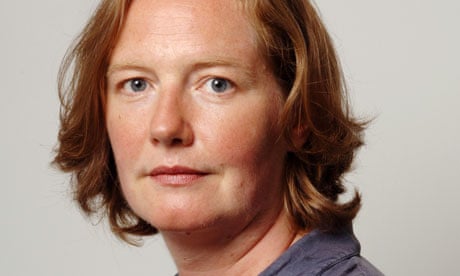
(Trustee since 2013)
A former Guardian stalwart who launched the Guardian's original online presence (Guardian Unlimited) and later departed to take a professorship at Columbia University. Given the plethora of digital interests within the group, her experience must be vital. However, as a result of the governance review she will move to the GMG board.

(Non-Exec since 2015)
A serial board member and corporate governance activist. Has negotiated her way into many a board room through the use of the Share Action platform. Unclear what is brought from a media perspective given her primary specialism is in lobbying companies and financial service firms to change their corporate practices and one feels that the Guardian is not the immediate priority for this kind of thing.
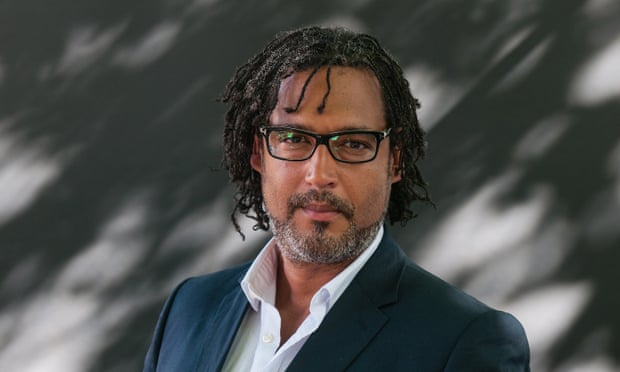
(Non-Exec since 2018)
A writer, director and academic with impeccable credentials and a long track record on the creative side but precious little commercial experience.
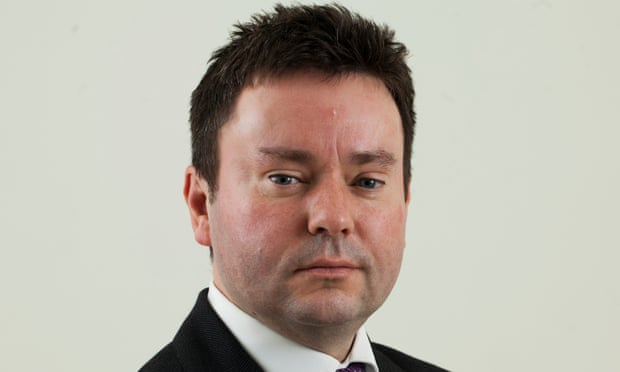
(Journalist Director since 2016)
The Guardian's business and city correspondent and the person elected by the Guardian's journalistic staff to represent the interests of the Group's editorial staff on the Scott Trust. Katherine Viner (effective GMG CEO) is his boss.

(Non-Exec since 2015)
Strange choice but one of the longest serving members of the trust board. Has a long track record at Penguin and Harper Collins on the executive side but these are private sector commercial publishing organizations rather than freedom promoting journalistic institutions. One of few board members who pre-dates Katherine Viner.

(Trustee since 2020)
A campaigning barrister who has also worked for the Mayor of London under Sadiq Khan's administration, he brings a long career of specialist legal understanding on Human Rights issues and media law topics. From his background and pedigree, one of the most qualified people to be sitting on the Scott Trust board given it's raison d'etre.

(Trustee since 2015)
Vivian Schiller joined the Scott Trust in 2015. She is Executive
Director of Aspen Digital, a program of the Aspen Institute. Previously
she has held multiple high-profile media roles including head of news at
Twitter, general manager of NYTimes.com and president and CEO of
National Public Radio. Strong background given the priorities of the trust, especially her experience with NPR which has to survive the markedly more cut-throat and evil media landscape .
(Trustee since 2020)
A stalwart of the right-of-centre press with impeccable credentials when it comes to middle-of-the-road commentary. She also sits on a number of investment trust boards which is one of the easiest gigs in the professional director career. Recently "promoted"to the GMG board where the money is better.

(SID since 2015)
Has the longest career description on the Scott Trust website which is ironic given his main qualification is in the name. Obviously trusts are a complex way of pretending assets are not part of a family but it must be said that the Scott family have generally only taken a minimal direct salary from the Scott Trust and have thus avoided riding on the coat tails of the group by focusing on such media-unrelated areas as "(a) consultancy business specialising in strategy and execution for digital audience growth and monetisation" and "...senior roles in consumer publishing, digital and broadcast sectors".
(Trustee since 2015 when she also became Editor-in-Chief of the Guardian News & Media)
Katharine Viner is the Editor of the Guardian and effectively the most powerful person in the GMG and Scott Trust. She makes editorial decisions and recently ousted the CEO of the GMG when they clashed over the commercial direction of the enterprise. She led the fledgling Australian organization before transferring over to the perenially loss-making US side of affairs. Ms Viner is the person who carries most responsibility for the future progress or otherwise of the GMG and Guardian News Media.
Guardian Media Group
For reasons which may become clearer, Guardian Media Group has a substantive board of non-executive directors and also a group of executive directors who are not directly involved in the underlying operating companies. Though this seems illogical, given the enterprise is effectively a subsidiary of another (trust) company and that it creates a duplication of oversight between an asset owner and it's underlying operating entities, the rationale for this becomes clearer when one examines who makes the day-to-day decisions. GMG is becoming the effective senior management and also the effective governing organization of the Guardian and is, in effect, supplanting both the Scott Trust and the management of the underlying entities. The Scott Trust is put nicely in a corner where it can get on with it's business of, well, being the Scott Trust. At the same time, the operational management of the underlying organizations within the GMG (ie Guardian News & Media) become "focused" on their roles of being journalists and stay out of the "commercial and financial strategy and delivery" which will become the preserve of the GMG.
GMG tried to obfuscate this earlier in the year when a long-touted "governance review" determined that all was well but that "to support a business structure and model which has now been largely supplanted by a new model focused squarely on journalism" a "...clarif(ication of) our governance arrangements will give better support to the business and to our senior executive team in developing and implementing successful long-term strategies across editorial, commercial, product, data and other teams.". This is the kind of garbled management speak of which Mckinsey would be proud and is much loved in corporate world but perhaps something which the Guardian might wish to shy away from given it's focus on editorial and journalistic independence and integrity. In effect what happened was that two of the Scott Trustees mentioned above (Ms Bell and Ms Sieghart) moved from the Trust to the GMG, where opportunities to influence and be paid commercial salaries will be enhanced and which, we assume, will lead to a dilution of power at the Scott Trust level.
GMG Ventures
At the same time, GMG has chosen to incoporate a hellish-sounding VC fund (GMG Ventures) which will be structured for tax efficiency purposes within the group, handily providing a sink (and means of tax structuring) for losses on speculative ventures as these can be hived off into a subsidiary (and offset against tax liabilities on investment gains from the broader GMG) as opposed to handled within GNM itself and inevitably, should any of these be successful, used as a spin-off vehicle to enrich the relevant GMG executives and generate investment returns for GMG (with a nice kicker for GMG Ventures LLP and it's five employees). Effectively seeking to replicate the staggeringly successful Auto Trader transaction which was master-minded by former GMG CIO and head of GMG Ventures Alan Hudson. As per the GMG website "GMG’s investments provide financial security and support for our
journalism... GMG has built a cash
and investment fund of over £800 million, which includes the proceeds
from the 2014 disposal of its 50.1% holding in Trader Media Group (Auto Trader)."
I guess the question you might ask yourself at this point would be why, when GMG's position is secure following the Auto Trader transaction has it decided to set-up it's own Venture Capital Fund? A VC fund is like a long term hedge fund where returns accrue more slowly (provided one avoids shitting the bed in a world of highly speculative investments) and where you can invest more readily in your friends businesses with less scrutiny. It's not like the GMG is in need of the money and it's unlikely that managing a moderately sized VC fund wont distract the attention of the otherwise busy GMG executives. Indeed it seems that the management of GMG should be more focused on "commercial and financial strategy and delivery" as opposed to structuring VC funds, but, thank goodness, Alan Hudson and his team of four are there to manage the fund and ensure that everything is OK.
Obviously given GNM's unhappiness with tax havens, we hope that GMG Ventures wont engage in the kind of aggressive offshore tax planning which GNM has done so much to expose. That kind of thing might call into question the editorial independence of Guardian News & Media.
Subscribe to:
Posts (Atom)
Understanding Brecht - Walter Benjamin
Brecht, Brecht, Brecht. The name appears everywhere, in my reading, in my life, in day-to-day thumbing through periodicals. People refer t...
-
 Brecht, Brecht, Brecht. The name appears everywhere, in my reading, in my life, in day-to-day thumbing through periodicals. People refer t...
 -
 Thus Spake Zarathustra, an impenetrable work which I started on too young and which left me with a feeling of confusion. What was this that...
 -
Art Spiegelman's " Maus " comics are probably, alongside " Barefoot Gen ", the most impactful pieces of art I have b...
None of these things ever did really make a difference. The "market crash" we witnessed last year was simply the removal of some of the froth through zero interest rates being unwound. There has been literally zero transmission between those changes and the real economy thus far. We are just at the beginning of a tightening cycle in terms of it's real implications for the real economy.
The whole thing is a sham. The real problem we have is that much of the worlds productive capacity is being driven by a system which focuses productive capacity on ridiculous things which are not doing anything to address any of the worlds challenges (weaponry, financialized investment services, technological developments to sell and market products, rockets to take us to Mars, murderous self driving cars).
Fortunately large parts of the world have realized this and moved away from it. However this does not include the Anglo-speaking world who also love building weapons. So that will end well.